 |
| Ice — The Illusionary Treatment for Inflammation |
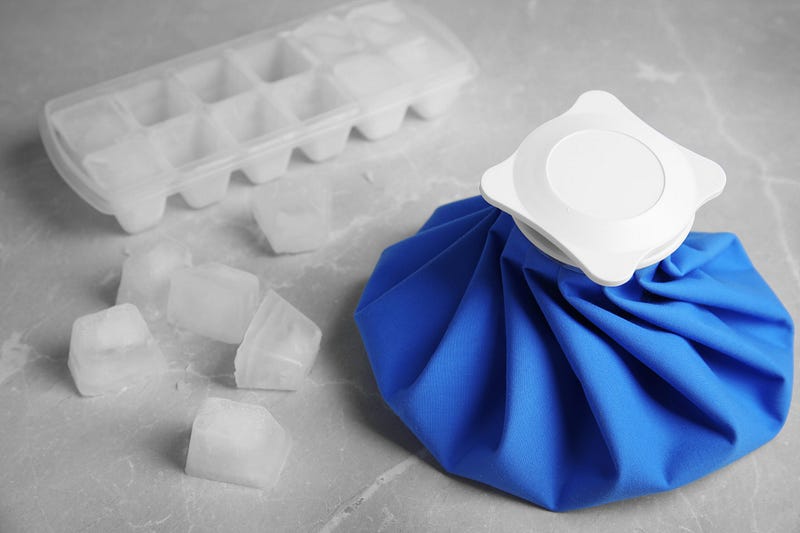
The practice of applying ice to an injury to reduce inflammation has been used for decades. The thing is, there’s ZERO peer-reviewed scientific evidence to support this practice. Recent studies have shown that ice may affect the healing process.
The question is, “Why do many healthcare providers use ice on an injury to help reduce inflammation?”
The idea behind this practice is that ice impedes blood circulation to the injured area and also minimizes swelling. But is this right? We’ll learn more from this article.
There’s nothing bad about inflammation
Inflammation is not bad — that’s a fact. It is a normal aspect of human physiology, so is there any reason why it should be stopped? You see, whenever a tissue is injured, the body makes attempts to remove the damaging stimulus and trigger the healing process.
The healing process includes increasing the circulation of blood and the flow of lymph to and from the affected area. This enhances the movement of inflammatory cells and nutrients to the injured site. On the other hand, the lymphatic system flushes out the waste and fluid that has accumulated due to inflammation.
Let’s talk about inflammation
The human body uses two systems of circulation. The major one is the blood circulatory system which includes the heart, arteries, and veins.
The lymphatic system is the second one. It comprises small bags that channels fluid to the heart. One thing about the lymphatic system is that it doesn’t have a pumping mechanism.
What powers the movement of lymphatic fluid is the activity and movement of the surrounding muscles. Muscle activity causes a squeezing effect that pushes the fluid towards the direction of the heart. If there’s no movement, the swelling will remain and will not be evacuated from the injured area.
Does the application of ice to inflamed tissues work?
Well, ice slows down the flow of blood to the injured site. Of course, this will reduce the pain by numbing pain receptors but the swelling may not readily be removed.
Because there is no movement with ice (zero muscle activity), a backflow of swelling occurs in the lymphatic system. So, rather than the inflammation decreasing, it increases due to poor evacuation.
What’s the right way to treat injuries and inflammation?
Whenever you are injured, you should put on an active approach. Doing so will provide the best benefit. A proactive approach mustn’t be complicated. It could be as simple as some gentle movement, usually pain-free. This will maintain movement and function.
There’s a suitable acronym for the proactive approach, and it is METH.
METH stands for Movement, Elevation, Traction, and Heat and was recently coined by a Toronto-based trainer and exercise physiologist, John Paul Catanzaro.
Movement
Because the lymphatic system hasn’t got a self-pumping mechanism, it relies on muscle movement to push the fluid. The implication is that getting rid of swelling does require some movement. If you experience pain while moving a limb, then you can apply a muscle stimulator to the affected muscles. This will promote muscle activity, and enhance lymph flow without causing pain.
Elevation
On its own, it may be the least effective due to its passive nature. On the other hand, combining elevation with movement will enhance the flow of lymph away from the injured area. The results can be very dramatic.
Traction
Traction depressurizes the injured area. Combining traction with movement promotes healing because it boosts the flow of fresh blood to the affected area. Also, combining traction with movement will reduce pain as it depressurizes the injured area.
Heat
This is a simple one. Heat enhances circulation. So, technically, it will boost the flow of fresh blood to the affected area. Fresh blood supplies fresh oxygen which speeds up the healing process.
Conclusion — Ice is not nice for injuries
With everything taken into account, we can accept that a harmony between the RICE and METH strategies is significantly relying upon the seriousness of the injury, area harmed, and span/time-pass following the injury.
For example, ice can help with diminishing torment and possibly important if the usage of natural inflammatories or painkillers are not available.
Basically, we should be liberal in our way to deal with treating delicate tissue wounds. What works for one individual, may not function admirably for another person.
Next time you think RICE, consider the METH strategy for treating that delicate tissue injury.
