 |
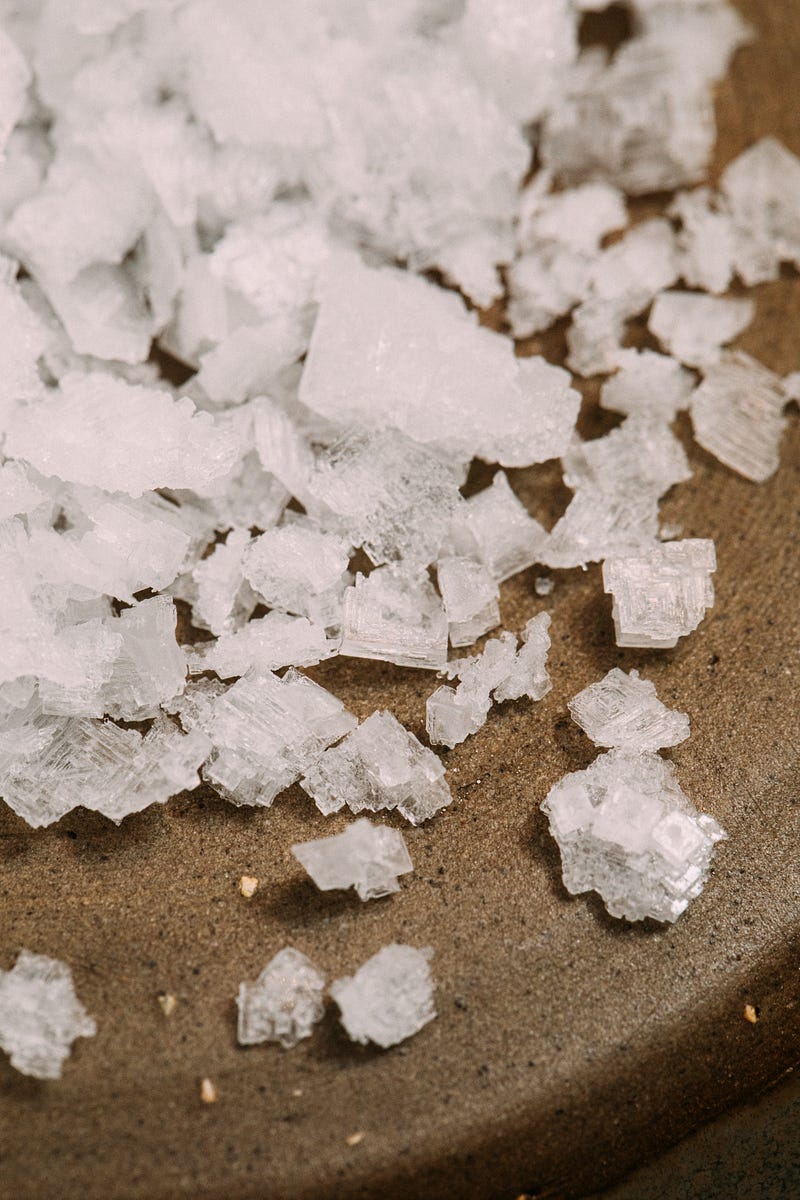
| Photo by Charles Deluvio on Unsplash |
We’ve received several warnings about the dangers of salt to our health.
Many health organizations have claimed that high salt intake causes several health conditions, like heart disease and high blood pressure. But then, these claims do not have strong scientific backing despite decades of research (1).
Also, many nutritional studies have shown that not eating enough salt can cause harm to your health.
This article will differentiate the myths and the facts about salt (sodium) and high blood pressure.
What is salt?
Another name for salt is sodium chloride. The salt that we use in cooking is made of 40% sodium and 60 % chloride.
Salt is a major dietary source of sodium. This explains why the words “sodium” and “salt” are used interchangeably.
There are also trace amounts of potassium, calcium, zinc, and iron in some varieties of salt. Table salt contains iodine as well (2, 3).
Salt contains essential minerals that serve as electrolytes. These electrolytes regulate fluid balance, muscle function, and nerve transmission.
Most foods contain salt, naturally. Salt is also added to foods as a flavoring agent.
It served as a preservative in the past. High amounts of salt can stop bacteria from growing in food.
Does sodium affect blood pressure?
Well, several health authorities have warned against excessive intake of sodium. We’ve been advised to take no more than 2,300mg of sodium daily, or preferably less (4, 5, 6).
That’s the equivalent of one teaspoon of salt (or 6 grams).
But the bad news is that over 90% of adults in the United States consume more than the recommended amount of salt (7).
Excess consumption of salt is believed to raise blood pressure, thus increasing the risk of stroke and heart disease. However, this may not be so true.
Yes, consuming less salt can lower blood pressure, mostly in people who have salt-sensitive hypertension (8).
The average reduction of salt is however very subtle for healthy individuals. According to a 2013 study, restricting salt intake in people with normal blood pressure caused only a 2.42 mmHg reduction in systolic blood pressure and a 1.00mmHg reduction in diastolic blood pressure (9).
That’s the same thing as going down from 130/75 mmHg to 128/74 mmHg. Is this worth the stress of eating a tasteless diet? I don’t think so.
Also, several review studies suggest that no evidence reducing your salt intake will reduce your risk of stroke, heart attacks, or death (10, 11).
A healthy diet is a key to lowering blood pressure
A healthy diet plays an important role in lowering blood pressure and keeping it at optimal levels. Studies have shown that adding greens and other healthy foods to your diet tones down your blood pressure (12, 13).
Fatty fish, berries, leafy greens, beans, seeds, lentils, carrots, and citrus fruits can help you achieve optimal blood pressure levels.
Leafy green vegetables contain lots of nitrates. Nitrates are known to help regulate blood pressure. Studies have shown that taking 1–2 servings of vegetables rich in nitrates daily can lower high blood pressure for at least 24 hours.
High blood pressure is about a potassium insufficiency — not necessarily a sodium excess.
Leafy greens that can help ease your blood pressure include:
- Collard greens
- Cabbage
- Spinach
- Mustard greens
- Kale
- Fennel
- Swiss chard
 |
| Photo credit: https://www.100daysofrealfood.com/green-smoothie-recipe/ |
There’s no better way to eat your daily greens than stirring your spinach into stews and curries, sauteing your Swiss chard with some garlic (makes a great side dish), or baking some kale chips.
You can also blend them together and make a tasty green smoothie out of it like the one pictured above. What’s your favorite type of green smoothie?


