Showing posts with label covid-19. Show all posts

Is Sitting Really that Bad?


Photo by Standsome Worklifestyle on Unsplash

It’s a new world. Everything has been modernized, right from our bedrooms up to our workspaces.

As such, most people spend more time seated than ever before.

But the question is, “does too much sitting have any negative impact on our health?”

We’ll find out the answer to this in this article.


There’s an increase in the number of people sitting these days

Sitting is a form of posture. People maintain a seated position when they work, study, travel, or socialize.

The average office worker spends an average of 15 hours a day sitting.

But that’s not to say that sitting is an entirely harmless behavior. Frankly, sitting and other sedentary postures cause some harm to the body. In most cases, people spend over half of their day sitting, engaging in activities such as working on the computer, watching movies, or driving.

Studies have shown that the average office worker spends an average of 15 hours a day sitting. Conversely, a person working on a farm may spend just three hours sitting (1, 2).

When you sit too much, you burn fewer calories.

We burn calories anytime we engage in our activities of daily living. Even simple non-exercise activities like walking, fidgeting, and standing help us to burn calories.

Energy expended in this form is known as non-exercise activity thermogenesis (NEAT). It is important to note that a lack of this activity (NEAT) contributes to weight gain (3).

Sedentary acts like lying down and sitting do not expend much energy. As such, the number of calories that you burn will be severely limited.

Let’s consider agricultural workers. Studies have shown that the number of calories they burn is 1000 times higher than that of people who do desk jobs (4).

This is because most agricultural workers spend a large chunk of their time standing and walking.

Photo by Zoe Schaeffer on Unsplash

When you sit, your risk of weight gain is increased

Burning fewer calories increases your risk of weight gain. This explains why people who lead sedentary lives are mostly obese.

Studies have shown that obese people sit at least two hours more than people with a healthy weight (5).

A sedentary life is linked to early death

Data collected from observing over a million people revealed that leading a sedentary life puts a person at risk of early death.

Studies have shown that the risk of death among sedentary people is 22–49% higher (6).

Sedentary behavior is also associated with chronic diseases

Studies have associated a consistent sedentary behavior with at least 30 chronic diseases. This includes a 147% increase in one’s risk of heart disease and a 112% increase in the risk of type 2 diabetes (6).

Research has also shown that not walking up to 1500 steps daily or sitting for a long time causes a rise in insulin resistance, driving type 2 diabetes (7).

Medical researchers think that leading a sedentary life may have a direct impact on insulin resistance. It is also worth knowing that this effect may occur in less than a day.

What you should do instead

Without a doubt, there’s a lot of sitting in Western societies.

However, while relaxing isn’t bad in itself, you must reduce the amount of time that you spend sitting at work.

If you’re doing a desk job, then invest in a standing desk. Ergonomics in the work environment is important. You can also take short walks while at work.

Reducing the amount of time spent sitting is as important to your health as regular exercise and a healthy diet.

Photo by Harmoni Desk on Unsplash


References

  1. Dunstan, D. W., Howard, B., Healy, G. N., & Owen, N. (2012). Too much sitting — a health hazard. Diabetes research and clinical practice, 97(3), 368–376. https://doi.org/10.1016/j.diabres.2012.05.020
  2. Levine, J. A., McCrady, S. K., Boyne, S., Smith, J., Cargill, K., & Forrester, T. (2011). Non-exercise physical activity in agricultural and urban people. Urban studies (Edinburgh, Scotland), 48(11), 2417–2427. https://doi.org/10.1177/0042098010379273
  3. Villablanca, P. A., Alegria, J. R., Mookadam, F., Holmes, D. R., Jr, Wright, R. S., & Levine, J. A. (2015). Nonexercise activity thermogenesis in obesity management. Mayo Clinic Proceedings, 90(4), 509–519. https://doi.org/10.1016/j.mayocp.2015.02.001
  4. Levine J. A. (2014). Lethal sitting: homo sedentarius seeks answers. Physiology (Bethesda, Md.), 29(5), 300–301. https://doi.org/10.1152/physiol.00034.2014
  5. Levine, J. A., Lanningham-Foster, L. M., McCrady, S. K., Krizan, A. C., Olson, L. R., Kane, P. H., Jensen, M. D., & Clark, M. M. (2005). Interindividual variation in posture allocation: possible role in human obesity. Science (New York, N.Y.), 307(5709), 584–586. https://doi.org/10.1126/science.1106561
  6. Wilmot, E. G., Edwardson, C. L., Achana, F. A., Davies, M. J., Gorely, T., Gray, L. J., Khunti, K., Yates, T., & Biddle, S. J. (2012). Sedentary time in adults and the association with diabetes, cardiovascular disease, and death: systematic review and meta-analysis. Diabetologia, 55(11), 2895–2905. https://doi.org/10.1007/s00125-012-2677-z
  7. Krogh-Madsen, R., Thyfault, J. P., Broholm, C., Mortensen, O. H., Olsen, R. H., Mounier, R., Plomgaard, P., van Hall, G., Booth, F. W., & Pedersen, B. K. (2010). A 2-wk reduction of ambulatory activity attenuates peripheral insulin sensitivity. Journal of applied physiology (Bethesda, Md.: 1985), 108(5), 1034–1040. https://doi.org/10.1152/japplphysiol.00977.2009
Three Natural Ways to Defend Yourself Against COVID-19


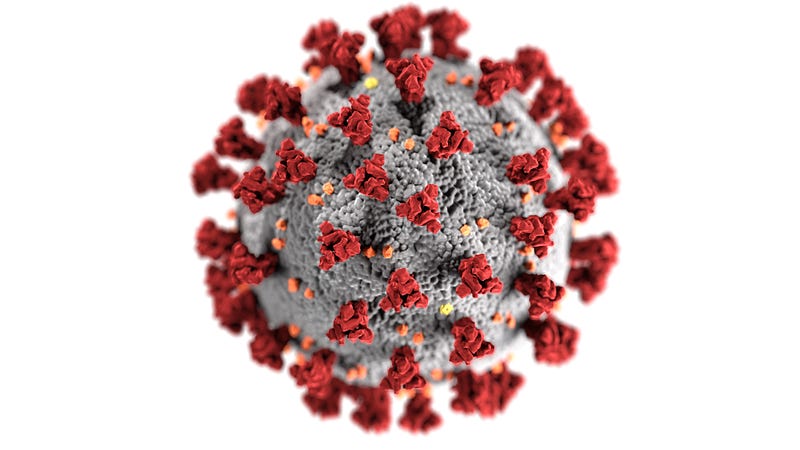
Photo by CDC on Unsplash

It is a known fact that viruses mutate rapidly, and these mutations cause the production or release of new variants of that virus. And, the novel coronavirus is no exception to this.

At least three variant strains of the novel coronavirus (SARS-CoV-2) have been studied.

What’s more? There is a need for people to be concerned about these new strains. There is evidence that these strains may be more infectious than the original strain, resulting in massive spikes in new cases.


CDC has made some discoveries about the strains

An increase in COVID-19 cases would greatly overwhelm global healthcare systems, resulting in many “preventable” deaths.

Although a lot of studies are still being done on the variants — their ease of spread, whether or not they cause severe illness, and if the current vaccines will be able to protect against these variants, the Centers for Disease Control and Prevention (CDC) has made the following discoveries about the new strains of the virus:

· There’s a large number of mutations in the B.1.1.7 variant of the virus. This variant was discovered in the UK and has spread across the globe, affecting industrialized nations like Canada and the United States. Agreed, the B.1.1.7 variant spreads very fast, but it is unknown whether it increases the risk of death or causes severe illnesses.

· The 1.351 strain was discovered in South Africa. This strain is independent of the UK variant, but both share a couple of mutations. Several cases have occurred outside South Africa. However, the 1.351 strain is yet to manifest in the United States.

· The P.1 strain originated in Brazil. It was discovered in four Brazilian travelers who underwent screening at Haneda Airport on the outskirts of Tokyo. The P.1 variant has not been detected in the US. P.1 contains a couple of mutations that may influence its ability to be identified by antibodies.

How can you protect yourself against these new variants?

The best way to defend yourself against the coronavirus's old and new strains is by minimizing your chances of exposure to the virus by naturally strengthening your immune system.

Medical researchers believe that the new strains of the virus have spike proteins that are longer and more open than the original strains. This allows efficient penetration of human cells, thus increasing their level of infectiousness. This means that transmission of infection will not require many virus particles — just a small number can do.

This explains why people should be more vigilant.

Here are a couple of ways to naturally protect yourself and your loved ones from the new strains of SARS-CoV-2.

1. Vitamin D

Research keeps coming out about the effectiveness of having optimal levels of vitamin D and defending against COVID-19. Having adequate levels of vitamin D can reduce hospitalizations and fatalities among COVID-19 patients.

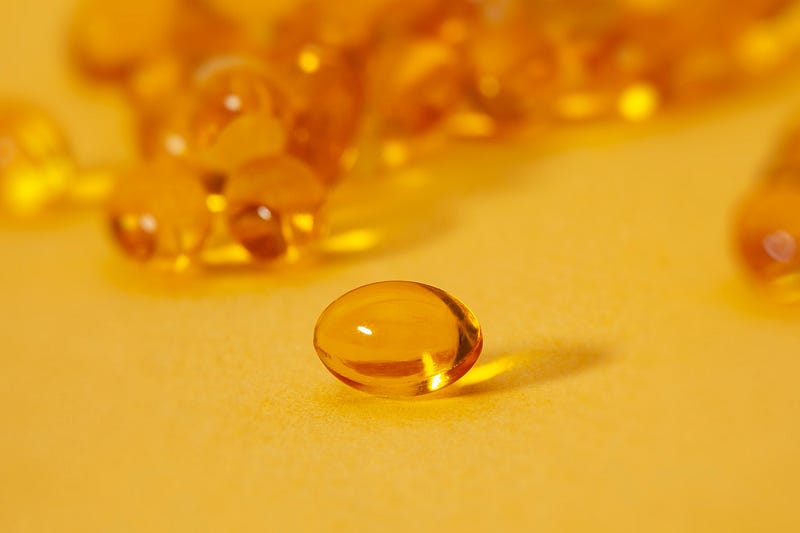
Photo by Michele Blackwell on Unsplash

A recent study published out of India showed that vitamin D supplementation of 50,000 IU reduced the risk for severe COVID-19 outcomes among infected adults. Always consult your primary care physician before supplementing a large dose of vitamin D.

2. Omega-3's

Another new study showed that 21% of critically ill COVID-19 patients given 600 mg of fish oil daily for two weeks had a 1-month survival rate compared to only 3% of the patients given a placebo.

Photo by Anshu A on Unsplash

Omega-3 food sources include grass-fed meats and wild-caught fish. If you do not have access to these food types, then I highly recommend you start supplementing omega-3 that is molecular distilled, and 3rd party-lab tested such as this one.

3. Exercise

It is a fact that exercising boosts our immunity and makes us fit. A new study of nearly 50,000 people shows that being physically inactive doubles the risk of coronavirus death. It is therefore important that you engage in moderate exercise. This will boost your immune function and minimize your risk of respiratory infections. Intensive or vigorous exercise is good, but you should avoid it if you’re not feeling too well.

Photo by Fitsum Admasu on Unsplash

References

Sallis R, Young DR, Tartof SY, et al. Physical inactivity is associated with a higher risk for severe COVID-19 outcomes: a study in 48 440 adult patients. British Journal of Sports Medicine Published Online First: 13 April 2021. doi: 10.1136/bjsports-2021–104080

Oristrell et al., Preprints, doi:10.20944/preprints 202104.0173.v1 (Preprint)
 Association of Calcitriol Supplementation with Reduced COVID-19 Mortality in Patients with Chronic Kidney Disease: A Population-based Study


Disclaimer

Dr. Brett Berner received his Doctor of Chiropractic degree from Palmer College of Chiropractic in 2015. Dr. Berner is a licensed and practicing Foundational Chiropractor in Lutz, Florida. This article is for general informational purposes only. It should not be used to self-diagnose, and it is not a substitute for a medical exam, cure, treatment, diagnosis, and prescription or recommendation. It does not create a doctor-patient relationship between Dr. Berner and you. It would be best if you did not change your health regimen or diet before first consulting a physician and obtaining a medical exam, diagnosis, and recommendation. Always seek the advice of a physician or other qualified health provider with any questions you may have regarding a medical condition. Foundation Chiropractic and Brett Berner, D.C. are not liable or responsible for any advice, course of treatment, diagnosis, or any other information, services, or product you obtain through this article or others.